The Biola Queer Underground

We, The Biola Queer Underground, are a group of like-minded LGBTQ (lesbian, gay, bisexual, transgender, and queer) students and allies who have formed a private underground community in which we share our life struggles, as well as our love and support for one another. The main problems that we see in the Biola community are the isolation, pain, and fear of LGBTQ people.  Our desire is to create a place of love and unity for LGBTQ and straight allies, where one can be open, vulnerable, and find unconditional acceptance. We also share a strong commitment to make Biola a safer, saner and more welcoming environment for students of all sexual orientations and genders. If you would like to be apart of what we are doing, or want a safe place to be yourself, we would love to talk to you. Because of the nature of our community however, we cannot simply post a time and a place for you to meet with us. If you are truly interested in joining or talking to us please email us at: biola.underground@gmail.com

So reads the “about us” section of The Biola Queer Underground’s website. For those of you who don’t know, Biola University is a conservative Christian university with traditional views on human sexuality.

The Biola Queer Underground is a website for LGBTQ students at Biola. It has recently been advertised on Biola’s campus without permission (permission wouldn’t have been granted anyways). The site has caused a bit of an uproar amongst both conservative and liberal students.

I won’t pretend to imagine the suffering that a LGBTQ person experiences throughout their life. I have talked to a handful of  men and women within Christianity that struggle with same-sex attraction. They have described to me the isolation, disassociation, and shame they feel on a daily basis. Usually these discussions are ones that end in prayer instead of advice. They are never easy and always awkward. And they show me at least one thing about this issue: it’s an exposed nerve.

A few days ago I was introduced to this new movement by a flurry of text, twitter, and facebook messages all asking me what I thought. And yesterday, I read every single word on the site. Some of my friends are posting the site to be a part of what they might consider our generation’s most important civil rights movement.

I have a few thoughts but before I give them, I want to be up front about my stance towards LGBTQ lifestyles: I think they are prohibited in the Bible and therefore unacceptable choices for believers. That being said, there is a certain picture of Evangelicals as “gay-haters” that neither I, nor any one of my Christian friends can be identified with. I do not hate LGBTQ people. I do not believe that homosexuality (or anything else associated with it) is some sort of “super sin” that comes with a one-way ticket to hell. Homosexuality does not make me any more “uncomfortable” than anything else that I consider a sin. All of these statements need to be understood when you read what I have to say next. I want my cards to be on the table.

As I am sure that Biola University is developing a thoughtful response, I have been reflecting on two ways in which Christians fail to deal with LGBTQ issues.  It is important to note that the further leans into one of these two extremes, the less Christian they are acting.

First, there are the usual hate mongers. I don’t actually like using that word because I’m sure that somewhere, someone would apply it to me. I am not using it flippantly to circumvent the issue. I do not casually call someone who disapproves of something a hate monger. It’s used that way far too often and I’m tired of hearing it. But, in this case, the word fits. Here it would apply to groups of people that are so filled with anger and hatred towards homosexuality that their message totally misses the point. Signs reading, “God hates fags” are a common accessory in this camp. As with anything so controversial, there are continual shades of grey leading away from this very dark black. The message is not God centered or love centered. It does nothing but inspire fear and loathing. This is an unhelpful way to respond to LGBTQ issues. Many who act this way aren’t Christians at all, they just use our name and make us look bad.

Second, there is the other extreme. I have seen too many situations where someone cares so much for the immediate feelings of whoever they are interacting with that they fail to stand up and identify sin. It is too often assumed that sparing somebody’s feelings is more important than rebuking them. I think that this response is born from the sad conflation of love and approval. Love is not approval. Love can lead to approval, and the other way around, but they aren’t the same thing. I don’t actually act in love if I approve of an action. In fact, if I approve of sin in someone’s life, I am failing in love to him or her. The idolization of approval has diluted the Church’s ability to call for righteousness in people’s lives. It is important for Christians to teach Biblical truth.

A friend recently told me that Christians need to address these issues. He added, “with boldness and love.” These two ideals are not mutually exclusive. In fact, I believe that they are closely connected. When I truly love someone, I must speak boldly to them when I believe they are sinning.

Whereas I disagree with many of the statements on the Biola Queer Underground website, I do hope that it sparks conversation and helps to create an environment where meaningful discussion about LGBTQ issues and Spirituality can take place.

You might also enjoy…

25 responses to “The Biola Queer Underground”

  1. Ben Camp

    I disagree with your reading of the bible on this issue. What is next?

    1. Andrew Kelley

      Ben,

      I think your comment could mean a couple of things (particularly the “what is next” part). I’d be happy to respond, but maybe you could clarify a little before I look dumb by responding to the wrong thing?

    2. Ben,

      I may be wrong in how I interpret your comment, but I can only go with what you have supplied.

      First, it’s okay that you disagree with Andrew’s (and mine for that matter) interpretation of the Bible. You are allowed that freedom. But simply saying that you disagree does not make you right and Andrew wrong. You must offer your evidence for such a statement, which you have not done. Andrew has thoughtfully and loving provided a rationale defense for his views, based on his reading of Scripture. You say you disagree. How? Why? On what basis do you make such a statement? This is where I am afraid this whole thing breaks down. You cannot simply rely on your feelings or thoughts as the basis for your opinion. You must provided a some objective reason that can be seen by all. Simply feelings or subjectivity will not work in any discussion or disagreement. We have allowed much of this debate to go the way of subjectivity, and that is a losing cause. We are basically saying that the one whose feelings hurt the most or who have the strongest feeling about something win! This must never be the driving force for any moral or life decision. This is a slippery slope that we must not fall down!

      Second, I am not sure what you mean by what’s next. The way I understand this is that Andrew is wrong (simply because you say so?), now what? Now what is is that you have added nothing to this discussion. Please provide a defense for Andrew to be able to respond to. That is only fair in public debate and dialogue.

      I hope you are able to return and provide a reason for you disagreement. I know that Andrew and the rest of us here will be more than glad to respond in a loving and thoughtful manner. We welcome dialogue and disagreement. We will not silence you simply because we may not agree with you. But also, we will not be bold in proclaiming the transforming grace and Christ and his call for repentance.

      Thanks for stopping by Ben, please do continue your discussion with us here.

      Cliff

    3. Trey

      haha, Ben you are so ridiculous. My guess is what’s next is meant to move the conversation to a new topic…. possibly the reality that Jesus was black?

  2. Andrew,

    I very balanced, wise, and thoughtful post. I could not agree more.

    In Christ,

    Nate

  3. Ben Camp

    I guess my brief, enigmatic comment needs some clarification. I will be brief.

    My first sentence was meant to call into question the central premise upon which your advice is predicated. In my reading, this premise is that the bible unequivocally teaches that LGBTQ forms of sexual orientation/existence are prohibited by the bible. (You use the term “lifestyle” here, which is problematic, but that is a whole different matter.)

    This claim is dubious at best. I can pull out my Dale Martins, and you can pull out your Robert Gagnons, and we will still be left at an impasse. Ultimately, by questioning your foundational premise, I am making the point that this argument cannot be resolved purely in terms of biblical studies and arguments.

    This leads into my question. This question could be taken in a variety of ways. Let me give you just one. How do we move this conversation forward outside of your heterosexist premise? Your advice is only intelligible within a framework that assumes this premise.

    (And for Cliff: Andrew’s foundational premise was not defended whatsoever. I am sorry, but to suggest otherwise is just plain wrong. You write: “Andrew has thoughtfully and loving provided a rationale defense for his views, based on his reading of Scripture.” Really? Where? Are we reading the same post?

    All this to say, I do not see why I need to defend my assertion anymore than Andrew his. I provided as thorough of defense for my starting point as did Andrew. Although, this is not all that important because as I have suggested we will still arrive at our impasse at the end of all the so-called biblical arguments.)

    1. Andrew Kelley

      Ben,

      Thanks for the clarification. This is what I thought you meant, but I wanted to make sure. I agree that I did no support my “heterosexist” reading of the Bible. In this article, I didn’t have to. Not because I am certainly correct, but because the only way I could write anything like this is to assume the premise that the Bible actually teaches that homosexuality is wrong (one which many people who are going to read this assume). Talking about the morality of LGBTQ forms of sexual orientation is for a different article, or book, or class, or discussion, or whatever. But I don’t think we disagree on that.

      In terms of how we move forward, I still think you are a little vague, but I will assume (maybe at risk of looking or actually being stupid) one option. Perhaps you mean to ask how this discussion can even happen at a place like Biola, where the premise is assumed and those who don’t assume it may be expelled. I think this is an area where Biola chooses to have the conversation with those not at the school, in the same way that they would have the conversation about Jesus divinity with those outside the school.

      Lastly, in terms of using the term “lifestyle,” I apologize if it offended you or anyone else that read the article. One of the difficulties is that after reading a number of websites that are proponents of LGBTQ orientations, I became a little overwhelmed by the different terms that were used. I still don’t fully understand all of the semantics and I’m not sure there is even close to unanimity on it. So, feel free to correct me there, I don’t want to be offensive. If the term lifestyle is an issue outside of word usage, you can decide whether you feel like this is the right place to deal with it.

      Thanks for reading.

  4. Harout Mardikian

    Great response, Andrew. I stand by you 100%.

  5. Mike

    To Ben Camp:

    I do not hate people who practice homosexuality. I am not biased against homosexuality. However, how can you interpret what the Bible says about homosexuality to be anything other than clear, overt disapproval? There are no “different” ways to read this Scripture. Homosexuality is clearly defined as sin the Bible:

    1 Corinthians 6:9-10 – “Do you not know that the wicked will not inherit the kingdom of God? Do not be deceived: Neither the sexually immoral nor idolaters nor adulterers nor male prostitutes nor homosexual offenders nor thieves nor the greedy nor drunkards nor slanderers nor swindlers will inherit the kingdom of God.” (NIV).

    Leviticus 18:22 – “Do not lie with a man as one lies with a woman; that is detestable.” (NIV)

    Leviticus 20:13 – “If a man lies with a man as one lies with a woman, both of them have done what is detestable. They must be put to death; their blood will be on their own heads.” (NIV)

    Romans 1:26-27 – “Because of this, God gave them over to shameful lusts. Even their women exchanged natural relations for unnatural ones. In the same way the men also abandoned natural relations with women and were inflamed with lust for one another. Men committed indecent acts with other men, and received in themselves the due penalty for their perversion.” (NIV)

  6. Natalie Foley

    Andrew, very nice job in your post and follow-ups. I have great compassion for people in the non-traditional sexual orientation realm. It is not an easy path to walk. The isolation, disassociation, and shame you mention are torturous for people of all types. But the degree to which these folks experience these things must be extreme. I can’t imagine what it would feel like to be rejected by society, especially those who claim to be Christian but act in un-Christian ways.
    The premise you presume about what Scripture teaches about the LGBTQ community is the same as mine. It is predicated on key Scripture verses such as 1 Cor. 6:9-11, 13.
    It is interesting to me to note that six of the groups mentioned in these verses have no organized effort to change our minds about what Scripture says about them (that they are wicked): the idolaters, thieves, greedy, drunkards, slanderers and swindlers. And society in general still seems to uphold these beliefs. The four groups whose sexual behavior is tagged as immoral in these Scripture verses, however, are and have been campaigning to change our perceptions so as to deny what Scripture actually says. Sexual immorality and adultery, for example, are rampant and, for the most part, accepted and promoted as not sinful in our culture. Acceptance of homosexuality as a normal and healthy lifestyle is also heavily promoted. To the best of my knowledge male prostitution doesn’t get much press one way or the other; I am uninformed in this area.
    It was Paul’s intention in pointing out these many groups of “wicked” people to save them from themselves and, ultimately, build unity in the Corinthian church—he was encouraging them to be in agreement about all sorts of things, including forms of “wickedness.” It seems the Christian response should follow in line with his: he did not “unconditionally accept” immoral behavior so neither should any Christian. It would be beyond irresponsible to do so, wouldn’t it? What would we think of parents who supported their adult child’s bank robbing or murdering habit?
    Personally I do not hate any of the people in the groups mentioned above and find no call to do so in Scripture. To do so would be hypocritical. I am as guilty of sin as everyone else and must turn away from each new sin that is revealed in my life. I must also take Scripture at face value, trusting that it speaks the truth about everything written in it including what is now unpopular—not agreeing with the LGBTQ positions.
    One of my favorite verses in the Bible is Peter’s comment that the Lord is patient with us, not wanting anyone to perish, but wanting everyone to come to repentance. (2 Pet 3:9). To me the crux of a discussion with someone in the LGBTQ community about what is written in verses like 1 Cor 6 is just about that: not wanting them to perish. The same would be true about anyone not living in accord with God’s Word. And if a Christian brother or sister saw a sin in my life I would hope that they would come to me in love with compassion to alert me to my ways and help me mend my ways.

  7. Carrie Allen

    I agree with Ben in that I would love to see this conversation moved outside it’s pretty little box. Let’s talk about people who were born with both male and female body parts – what gender partner do they need to be Christian? And let’s talk about the Biola students who are LGBTQ… They love Jesus. Of course they don’t want to be gay. I’m sure those students would be thrilled to be straight because of all the hate and shame they experience. So I don’t think the answer is as simple as saying, “just be straight or abstinent.”

    I mean, this is it. This is the time in history where this conversation is going to be “had”. I feel like the egalitarian and complementarian argument is starting to die out because people are realizing, “huh, maybe women should be treated as equals.” duh. So this whole LGBTQ convo is where the church needs to go. And the church can’t just give simple answers to shrug it off. It’s a hard topic, I know. But because it’s so hard means we cannot just have this problem solved in one blog post. I think that’s what Ben is getting at. Let’s keep talking about it.

    1. John Anthony Dunne

      Carrie, can you give us a trajectory for where you think this conversation should go?

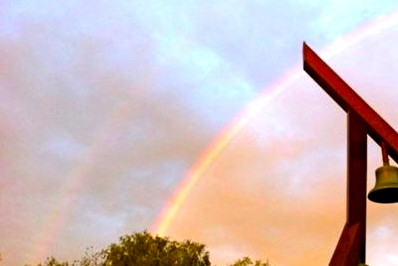
      1. Well first, lets begin by taking down the rainbow picture as the representative of this post.

        Second, I think we could do some work in the Old Testament… not so sure the passages quoted in various comments are good arguments.

        But, really, this blog is geared more towards evangelicals and I respect that. But because of this I am not so sure the conversation could go in other directions I am thinking.

        Final note – when you crawl out of the thick bubble of Christian school, Christian friends, Christian everything, and experience life (TRUE friendships… not just a “hello” at work) with many different people from different backgrounds, as you carry around the love of God in your heart, these issues become extremely difficult. This final note is not geared at you, John. I know you have crawled out. 😉

        1. Andrew Kelley

          Carrie,

          The picture I selected was from the actual sites Twitter.

          1. Ok, I am ready to talk less about Obama’s views on homosexuality and more about Romney’s heresy. Go!

      2. Also, I just realized I received many thumbs down (I think). Harsh. 😉

      3. Sorry, one last thought! I think it would be fair to address the issue of church and state.

        Complementarian churches do not let women take leadership roles, but Christians do not generally desire to enforce this in the secular workplace. So why do Christians care about secular marriage? And with this we could talk about the 50% divorce rate among Christians when the idea of “protecting marriage” comes up.

  8. I think it’s also very important to entertain the possibility that, even if the Bible demonstrably does describe homosexuality as a sin, the Bible could be wrong.

    After all, as I’m sure you’re all aware the Old Testament describes all many of activities as sins, which are no longer considered sins, but, furthermore, the Bible has been use to justify things we now find morally reprehensible, such as slavery, the subjugation of women and polygamy. Let’s consider, also King David, who lusted after a woman, then essentially had her husband murdered, so he could sleep with her. Yet, he’s described as “a man after God’s own heart.”

    Given this background, I would posit, that the problem is not with homosexuality, but with a literal reading of the Bible.

    And to give you some context, I am a “straight” former fundamentalist, who is intimately familiar with both the Old and New Testaments having earned two degrees at a Christian university. I don’t say that to pull rank, but to point out that I’m not coming out of the blue with these opinions.

    Thanks.

    1. Andrew Kelley

      Hey RS,

      Thanks so much for reading, I really appreciate it. I think that your criticism concerning whether or not the bible could be wrong on this issue (or that its literal reading is a problem) is a little bit difficult for me to address in the context of this article. I imagined the primary audience of this post to be Christians who are in a similar camp as me in terms of their views on LGBTQ issues – although I am happy to have anyone read it and share their thoughts. That being the case, there is a built is presupposition to the post, and therefore I did not feel the need to defend my worldview claims. I simply was sorting through how one who holds this view might respond to members of their Christian community who are involved with LGBTQ lifestyles.

      That being said, we would love to, at some point, talk more about the issues that stand behind this post: whether or not the Bible is authoritative, inerrant, or infallible. Furthermore, even if those characteristics are assumed about the Bible, whether or not the hermeneutical methodology used to come to my particular reading (one that I do share with many others).

      I agree that the bible has been used to subjugate women, propagate slavery, and approve of polygamy, but I think we can both agree that those usages were a result of a “bad” reading of the Bible (correct me if this assumption about our agreement here is wrong). It is sad to me that is the case, and I wish it had never happened, but I’m not convinced that historical misuses of the OT and NT are arguments that this reading of the bible is wrong. But, as before, that is probably a conversation for another post.

      Lastly, regarding your example of David as a murderer and adulterer but who is, at the same time, “a man after God’s own heart,” I disagree with your conclusion. David’s actions here are characterized as evil in the OT. Moreover, he suffered the consequences of his actions. Because these actions were considered evil by the author (and nearly every reader throughout history) it would seem unfair to say that this is an example where the Bible is approving of such behavior. Perhaps you are saying that because he is also described that he is “a man after God’s own heart” that the Biblical author is approving of all of his actions. I would disagree with this and point to all of the places throughout scripture where Godly men do ungodly things (Moses, Noah, Peter, etc.). And it might even be important to point out that even the very “good” men in the Bible were in need of God’s grace. But, one last time, this may be a conversation that would better accompany questions of hermeneutical methodology.

      In terms of “pulling rank,” don’t even worry about it. Regardless of your background, your opinions and voice matters. I’m glad you brought these issues up and appreciate that you identified yourself (though your website and a brief self description). It is far better than being one of those invisible internet trolls who pop up to say nasty things and disappear again. There are too many of those.

      Thanks again for reading, I would love to hear your responses, and I hope you come back.

  9. dan

    I would like to know how you (and some of the commenters here) here feel about how the Bible addresses other issues like slavery, polygamy, adultery as a capital offense, and eating unclean foods. Doesn’t every Jew and Christian pick and choose what parts of the Bible they want to follow? I’m just curious why you decided the proscription against homosexuality falls on that list.

    1. JD

      Dan, here’s an old article from Biola Magazine that addresses some of the “picking and choosing” questions: http://magazine.biola.edu/article/09-summer/moses-shellfish-and-the-church/

      A helpful book on this subject is “Slaves, Women and Homosexuals,” by William J. Webb, who argues for what he calls a “redemptive-movement hermeneutic.” Among his many arguments, Webb says the Bible consistently treats slaves and women more fairly than surrounding cultures, while setting them on an ultimate trajectory toward equality. (In his latest book, he makes a similar case for why Christians should no longer spank children.) On the issue of homosexuality, however, Webb says the Bible is consistently and explicitly more restrictive than surrounding cultures, and doesn’t seem to give any room for inflexibility. There’s much more to it than that, of course. I’ve found it to be quite convincing.

  10. Struggling

    Thank you, Andrew,

    This post has a tone of kindness and Christ is a light of kindness.

    I am a bisexual man and I believe in Jesus Christ. It is a great struggle. There is no way to bring someone to understand the conflict without experiencing it themselves.

    I am ashamed of the sins I have comitted, and yet I have felt the unmistakable love of God and the cleansing power of Christ’s sacrifice for me personally.

    The relationship between repentance and forgiveness is with God and an individual.

    I recognize that on my journey to be nearer to God I am struggling. It is my responsibility (and mine only) to approach that great barrier.

    The believing individuals in my life who have expressed great love for me without condoning my sins have truly answered my prayers. True friends have been firm in their messages to me that living a sexually active LGBT lifestyle would not bring happiness while also reaching out to me regularly with love.

    The line of loving a sinner and not a sin is a delicate one to walk. I applaud you for opening this discussion and encouraging us all to step outside of a comfort zone and love our neighbor, however differently from ourselves that neighbor may be sinning.

    1. Andrew Kelley

      Thank you for your openness in this comment. I am thankful for your willingness to obey God and am even more thankful for those around you to walk with you through this. My prayers are with you.

  11. […] our blog to the underground LGBTQ community at the alma mater of most of our writers, known as the Biola Underground. At the time, Andrew’s post appeared shortly after the Biola Underground website emerged. […]

Leave a Reply to John Anthony Dunne Cancel reply

Your email address will not be published. Required fields are marked *