
Last week I posted an entry on alcohol in the OT and you are personally invited to read my former post before reading this if you have not done so, since the NT builds on a lot of the same theological imagery. I’m not sure what the general assumption of most Christians would be; whether the NT is more strict or less strict regarding alcohol than the OT. But whatever the case may be, the same general pattern emerges, as we will see.
I would venture to say that there is no more clear place to look if Christians are seriously concerned as to whether or not consuming alcohol is a sin than Jesus himself. Perhaps there is no one more lenient in the Bible on this issue. Casual references to wine and vineyards arise out of Jesus’ regular teachings (Mt 20.1-16; 21.28-32, 33-46; Mk 12.1-12; Lk 10.34; 13.6-9; 20.9-18). Of course, he even refers to himself as the true vine and the Father as the vinedresser (Jn 15.1-11). When asked by the disciples of John the Baptist why he and his disciples did not fast (although they themselves and the Pharisees did), Jesus told them that it is appropriate to feast whenever the bridegroom is present, which was a reference to himself (Mt 9.14-17; Mk 2.22; Lk 5.37-39). He further connected this idea of fasting to the importance of new wineskins for new wine. In light of our OT survey on alcohol, Jesus’ words here ring with eschatological overtones.
This also directly relates to Jesus’ words during the Last Supper when he announced that he would not partake of the fruit of the vine again until the Kingdom comes in its fullness (Mt 26.29; Mk 14.25; Lk 22.18). Here Jesus echoes the OT images of overflowing wine in the coming age (cf. Am 9.13-14). That Jesus used wine for the institution of the Lord’s Supper is clear from parallels with the Passover celebration and subsequent church participation (cf. those who were getting drunk in 1 Cor 11.21).
So what can be made of Jesus’ consumption of alcohol during his earthly ministry? Of course, on the cross Jesus refused to drink wine (Mt 27.34, 48; Mk 15.23, 36; Lk 23.26; Jn 19.29-30). Yet, there is an interesting allegation found throughout the Gospels in this regard; namely, that Jesus was a drunkard (Mt 11.19; Lk 7.33-34). This was in major contrast to John the Baptist who did not drink wine or any strong drink (Lk 1.15; hence his disciples’ question about fasting). Now, lest I be terribly misunderstood, Jesus was not a drunkard and the text makes that clear. However, given that Jesus was considered to be a drunkard (and I’m talking to those with an anti-alcohol bias), what would this mean about Jesus’ personal appropriation of alcohol? At the very minimum, we could not conclude that Jesus abstained from alcohol. This is also implicit in his words at the Last Supper (i.e. he would not drink it again until the eschaton). Yet, we are inclined to go further, beyond the question of his own appropriation of alcohol into his assessment, and we can see clearly that it is positive. His first miracle, as John 2 records, involved making roughly 120-180 gallons of wine for goodness-sake! And if you’re tempted to think that this was grape juice, recall the fact that wine is an aged drink and note the words of the master of the feast, “Everyone serves the good wine first, and when people have drunk freely, then the poor wine. But you have kept the good wine until now” (Jn 2.10). Again, with the abundance of wine in this miracle, we see more allusions to the OT imagery of wine in the eschaton. In Jesus’ ministry the Kingdom of God was inaugurated; the fullness awaits his return. Thus, the abundance of wine at Cana is a glimpse of the OT images associated with the coming eschatological age.
In regards to the broader teaching of the NT, there is a similar negative assessment of drunkenness as the OT (Mt 24.29; Lk 12.45; 1 Cor 5.11; 15.34; 1 Pet 4.3; Rev 14.8; 17.2, 6; 18.3). Furthermore, the NT contains the motif of the execution of God’s wrath with imagery taken from the wine making process and describes the recipients of judgment as those who are ‘drunk’ from this ‘wine’ of judgment (Rev 14.10, 18-20; 16.19; 19.15). Due to the pending judgment of God, the NT uses imagery of drunkenness as it relates to eschatological preparedness (Lk 21.34; Rom 13.11-14; 1 Thess 5.6-8; 1 Pet 1.13; 4.7; 5.8). Believers are not to be drunk in this eschatological sense. Instead, we are to be alert and ready for the return of the Lord.
Perhaps the Apostle Paul goes farthest of any writer in the Bible by stating baldly that drunkards will not inherit the Kingdom of God (1 Cor 6.10; Gal 5.21). He states in Eph 5.18 that instead of being drunk with wine, believers should be filled with the Spirit (This should not be correlated with Acts 2.13-15 and the apparent drunkenness of believers at Pentecost to create an unbiblical notion of ‘being drunk in the Spirit’ as folks like John Crowder and the New Mystics have done). He also commands leaders in the churches to abstain from drunkenness and to be sober, which he applies to the elders and their wives, deacons, as well as ‘older men’ and ‘older women’ (Rom 12.3; 1 Tim 3.2-3, 8, 11; 2 Tim 4.5; Tit 1.7; 2.2-3). The prohibition of over-indulgence here should be understood along the same lines as the prohibition of gluttony, slothfulness, and greedy-wealth. The abuse does not nullify the proper use. Too much of anything is a bad thing, even water! In fact, Paul never communicates complete prohibition in his letters, even for leaders in the church. He tells Timothy to drink a little wine for his stomach ailments (1 Tim 5.23), and broadens the issue of wine-drinking to the proper use of liberty in relation to causing one’s brother to stumble (Rom 14.20-21). In the broader context of the ‘weaker brother – stronger brother’ dispute of Romans 14 it is quite clear that wine is for those who are strong in faith; convinced that all things are clean and consume it with a heart of thanksgiving to God. When defending his apostolic authority in 1 Cor 9.4, Paul asks, ‘Do we not have the right to eat and drink’? Contextually, the reference to ‘drinking’ should be understood as a reference to an alcoholic beverage since that is what would be potentially disputable. Furthermore, he tells the Colossians not to let anyone pass judgment on them in regards to ‘food and drink’ (Col 2.16). And he concludes, ‘So, whether you eat or drink, or whatever you do, do all to the glory of God’ (1 Cor 10.31).
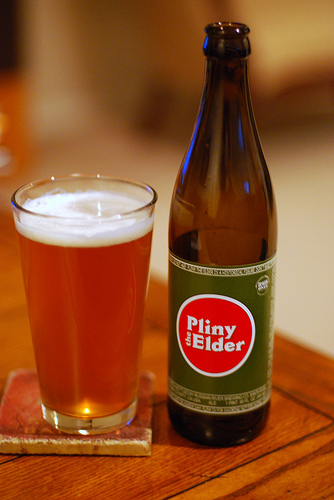
Although the NT does not have as many references to alcohol as the OT, both Testaments contain many of the same themes. What we have from the full biblical picture is a clear rejection of habitual drunkenness. But at the same time there is not one text which provides absolute prohibition of alcohol for all people at all times. We have clear warnings about the potential dangers for over-indulgence, and we ought to heed these warnings. Yet, when seen on the larger biblical canvas, the overwhelming conclusion is that alcohol is not prohibited outright. In fact there are many positive images of alcohol. Prudence might cause one to abstain from alcohol because of a personal inclination towards addiction, or from witnessing the abuse of alcohol in one’s own family. These are legitimate reasons to stay away from alcohol and I certainly would not try to argue with someone who held these convictions. As Paul said, one has to be convinced in his own mind or else it is sin (Rom 14.5, 14, 22-23). But hopefully, it has been demonstrated that there is no biblical warrant for concluding that the mere consumption of alcohol is sin. Furthermore, enjoying alcohol is not a sin, nor does it make one an alcoholic. I love Starbucks Frappuccinos, but I’m not going to have 6 of them. In the same way, I love beer, but I enjoy it so much that I don’t want to abuse it. Now, whatever your beverage of choice may be (I prefer craft beer brewed by such microbreweries as Dogfish Head, Russian River, and Stone), let us as Christians enjoy alcohol moderately and faithfully in light of the liberty that we have in Christ. Cheers!


Leave a Reply