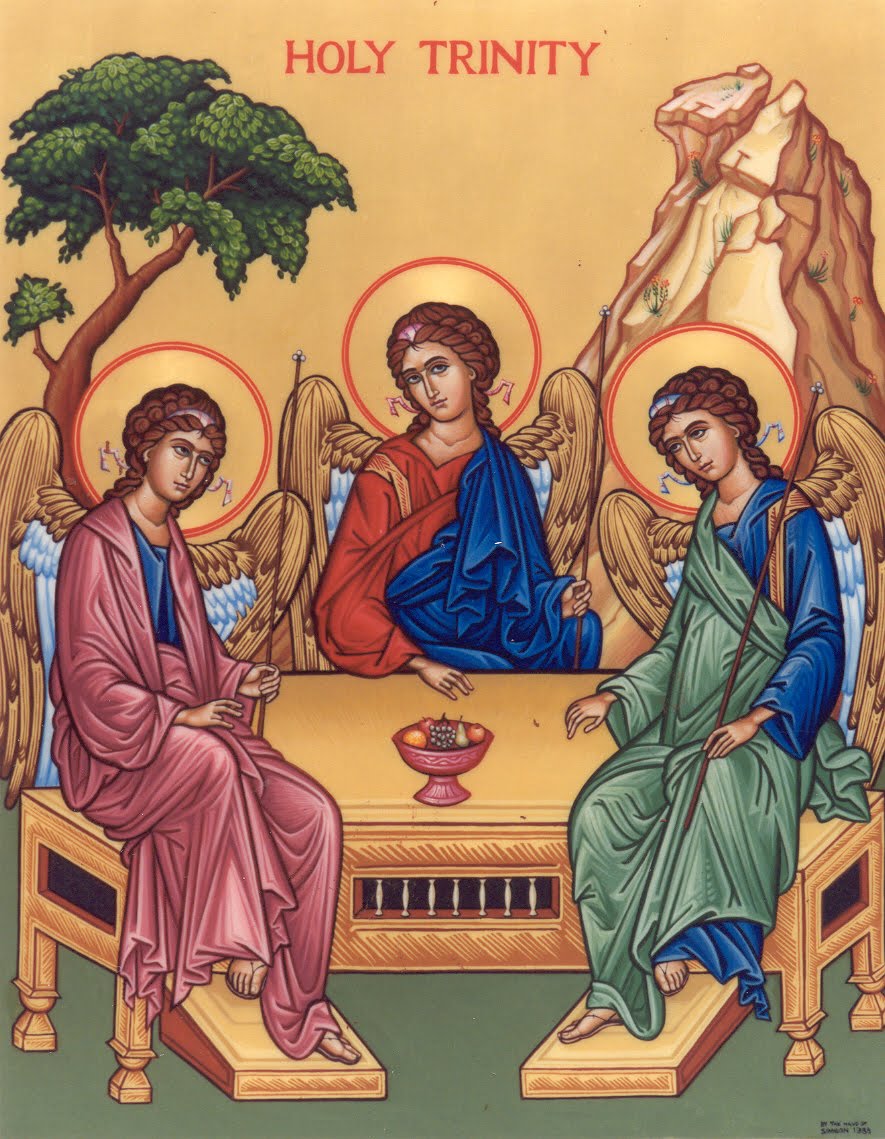
Objections to the Trinity

Here in Sydney I’m currently co-teaching a seminary class on the doctrine of the Trinity. We’ve spent the first few weeks of the course reading and discussing some sermons by Gregory of Nazianzus. The next section will focus on parts of Augustine’s De Trinitate. In the final third of the semester we’ll work through §59 of Karl Barth’s Church Dogmatics–“The Way of the Son of God into the Far Country”.

Anyways, one of the things we’ll be doing tomorrow is having the students wrestle with a set of objections to Nicene trinitarianism. The questions and statements come from a group of radical Arians called the Eunomians. The students will have read a specific sermon in which these objections are dealt with, but we’ll pose the questions to them and ask them to respond without referencing the text (at least at first).

So, I thought I’d pose the same questions to you orthodox trinitarians out there! Pick one or two or all of them and respond in the comments. I’m not going to refer you to the answer key just yet, but feel free to use the Bible and logic–and most of all, biblical logic. That’s what this debate was all about–how to read the Bible. 

Here they are, placed into the mouths of anti-Nicene objectors:

1. We can agree that we should speak about “the unbegotten” and “the begotten” and the third “which proceeds from the Father”. But when did these latter two originate? If you try to say that they are co-eternal, then aren’t you claiming that they are “unbegotten” just like the Father? This talk of co-eternality seems to have brought you to an absurdity, since on your own logic of co-eternality you have negated anything distinct about this second and third.

2. If you try to say that the “begetting” and “proceeding” are causal and not temporal processes, how can you have a causal process that does not imply change (and therefore time)? “Eternal begetting” is a contradiction in terms.

3. You Nicenes want to say that God is eternally a father, but doesn’t fatherhood imply something one becomes rather than something one is? How can someone be a father without becoming one? Further, even your language—“God begat” (past tense) implies that there was a beginning to the process of begetting. If there was a beginning to the begetting of the Son, then he has not always existed.

4. Let me ask you something about this purported eternal begetting: does the Father beget the Son voluntarily or involuntarily? If you try to say that it’s involuntary, you make God subject to some external compulsion. If you say that it’s voluntary, then the Son came from the Father’s will and not from his nature. The Son has a different fundamental nature than the Father.

5. You should be able to agree that the Son either existed or did not exist when the Father begat him. But if he existed, then he did not get his existence from the Father’s begetting. If he did not exist, then he is not co-eternal. Therefore he was created.

6. Something that is “unbegotten” and something that is “begotten” are obviously not the same kind of thing. Therefore the Father and the Son are not the same kind of thing either.

7. If, as you say, the Son is of the same substance as the Father, and the Father is unbegotten, then the Son must be unbegotten too. Thus your talk of “of the same substance” continues to cause you absurdities. Here it has made you say, “the begotten is the unbegotten”. That doesn’t make any sense.

8. God must have stopped begetting at some point. If God’s begetting stopped, then it must have started. At some point, therefore, the Father must have started begetting. Again, this talk of co-eternality is absurd.

9. You Nicenes make a lot out of the fact that the Father and the Son are both called “God”. We do not contest the point, but don’t you realize that you can use the same name to refer to different things—even different types of things? There is even no reason, for example, why we cannot use the term “dog” for both what is normally called a dog and what is normally called a shark. In the same way, we can call the Father and the Son “God” without implying that they are the same type of thing.

10. You claim that in one sense the Father is superior to the Son—in the way in which the Father is the cause. We agree with you here, but since it belongs to the Father’s divine nature to be cause, the Father is therefore greater than the Son—greater in nature.

11. When you use the term “Father” are you trying to designate the substance or the activity? If you say the substance, then you are agreeing that the “Son” is of a different substance from the “Father”. If you say the activity, then you are admitting that the Son is a creation, not an offspring, since to be father would then be the result of some activity of God and not something essential to God’s being


You might also enjoy…

11 responses to “Objections to the Trinity”

  1. John Anthony Dunne

    Hey Matt, generally speaking my consistent thought while reading this was that these objections assume that “Fatherhood” refers to God the Father’s nature, not person. So a nuanced discussion on the difference between person and nature seems in order for creating a proper rejoinder. Is this the sort of thing that “the sermon” deals with?—and who preached the sermon?

    1. John, that’s generally the way the discussion is headed, though there are some other important issues, too. For example, the Eunomians are really trying to push the implications of the use of begetting language. They insist that the very language of begetting is a temporal act. So the Nicene thinker–in this case, Gregory of Nazianzus–wants to make the case that we have to notice always a very important difference between the way terms apply to God as opposed to creatures. He accuses the Eunomeans of taking the implications of bodily begetting and reading them up into God’s divine being. He thinks an argument can be made from scripture that God is not bodily, does not change, and is on another level than creation. So he desperately wants to retain the biblical language of begetting, but he wants us to see that we cannot know the *manner* of this begetting. He says at one point that God’s begetting of the Son is as incomprehensible as God’s existence. Why does God exist? Why does God eternally beget the Son? You just can’t ask questions like that.

      We have a very bright student in our class, with a PhD in physics. He helpfully translated the notion of “divine mystery” operative here into terms that made more sense to some of the other students, and terms that were stripped of the notion of irrationality that seems to haunt the word “mystery”. He said that he saw Gregory using some of the Nicene creedal concepts (which were extrapolated from the Bible) as “axioms” in the scientific or mathematical sense. These axioms are simply given, they may seem paradoxical to us, and they cannot be justified on other grounds. However, they are the means by which math and science function. So in a similar way, we cannot explain the whys of God’s existence or his eternal begetting of the Son in a non-corporeal manner, but these are given and allow us to make sense of a lot of other things, especially what happens in Jesus Christ and our salvation.

      1. I don’t have anything helpful to add here, and I appreciate both of those comments in general. But I did want to mention that the language of “axiom” is just incredibly helpful. Way more helpful than “divine mystery.” Heck, even “divine mystery” becomes more helpful if we put it after the word “axiom.”

  2. David Arciaga

    I really enjoy your blog, although I am not a peer at the intellectual level as you, but would still like to engage in a discussion in it with someone, anyone. This issue has always seemed to intrigue me. I always took for granted the 3 in 1, co-equal position having been raised in a SBC most of my life. However, I have now assumed the position of the common layman in my approach to understanding the Word, using as few outside references as possible taking my influence from the Word itself and the HS. Based on this, therefore, I clearly see a hierarchy in the Trinity – Father, Son and HG in that order with different attributes – not co-equality. Jesus clearly claims some inabilities relative to the Father and some differences with the HS. Co-equality appears to deviate from scripture and disbelief in co-equality does not threaten salvation, IMHO.

    1. Thanks for your comment, David. We’re all learners here.

      In a very strong way I applaud your attempt to use “as few outside references as possible” and your desire to learn about God “from the Word itself and the HS”. Though it’s often assumed that the Trinity was the result of Christians getting fancy and philosophical, that is just not the case. Instead, it was about Christians taking how God reveals himself in the Bible with the utmost seriousness–literalness, even. They see a process of salvation whereby we are adopted by the Father, through the work of the Son and the indwelling of the Holy Spirit. This process of salvation allows us to participate truly in God’s own life of love.

      Now, the church Fathers (and I agree) saw the scriptures to be very clear about Christ’s being called “God”. They got to it later, but many of them read about the Spirit in this way too. The debate became about what it means when we call the Son (and the Spirit) God. For a number of reasons, a consensus emerged that saying “God” about the Son has to mean the same thing as when we say “God” about the Father. Here are a few of those reasons. *First*, Jesus talks about being “one” with the Father. *Second*, they reasoned that one was either God or not-God, there is no in-between of God and creation. One is either creator or created (this took a lot of arguing, and I’m happy to talk about how they argued that). *Third*, they reasoned that if the Son and the Spirit do not have the same level of being as the Father, then their work in the world (Jesus) and in us individually (Spirit) do not really bring us into touch with God. In fact, if they are mere creatures, then they too need someone to bring them into fellowship with God. *Fourth* (and a bit more obscurely), they argued that it was absurd to use the same linguistic category statement about two things that were so radically dissimilar. For example, you wouldn’t categorize a single dog and a single shark both under the category “dog”. You would either be saying that they were the same type of thing, or you’d be destroying the meaning of the term “dog” so that it was useless.

      As for your reference to a “hierarchy in the Trinity”, the church has not typically had a problem with affirming the language of hierarchy. Some of that language is in scripture–as you note! Jesus says that the Father is greater than he is. But if you take this statement as the definitive statement about the status of Jesus in relation to the Father, you deny the statements about Jesus being God. Of course if your interpretation of the biblical statements about Jesus being God deny the hierarchy language, then you have the same problem. We need a coherent way to hold both of these things together, or we’ll deny the Bible’s truthfulness altogether. At this point, the early theologians came to understand that the language of hierarchy refers to a real ordering within God’s own life. So the Father has primacy as the “unbegotten” or the “cause”, the Son then follows the Father as the “begotten”. But balancing this with the statements about deity (see above), they knew this had to be an ordering within the equality of divine nature.

      You also reference Jesus claiming “some inabilities” relative to the Father. This is correct. These are biblical statements, and the Trinitarians had no desire to ignore them or explain them away. Rather, they read the biblical statement about the Word becoming flesh (John 1:14), or key passages like Phil 2:5-11, and they saw that there was a movement in the life of the eternal Son. He is eternally with the Father, but at a certain point in our time, he adds a human nature to his divine nature. From the Bible they argued for this movement in the Son’s own life. What this then enables them to do is to make sense of the really high and lofty statements about Christ as well as the fact that he got tired, didn’t know everything, etc. The lofty statements refer to the Son as he is in eternity prior to his taking on human flesh. The statements about Christ being so lowly are referred to Jesus Christ the God-man compound. This scriptural strategy is what modern scholars refer to as the church fathers’ “partitive exegesis”. I would argue that you have to have a strategy like this when you read the Bible or you aren’t actually taking the Bible itself seriously.

      Finally, you mentioned that you don’t think a lack of “co-equality” threatens salvation. I’d really like you to explain how you think that is so. That would make for some good further debate. What do you think salvation is? And how is it accomplished without co-equality?

      Thanks again for your honest questions! I put this post up because I think as settled as we theologians think the doctrine of the trinity is, there are a lot of Christian sisters and brothers who live everyday in the Trinity (praying to the Father, believing in Jesus, walking in the Spirit), but who haven’t worked out what all this fuss about Trinitarian language is, and how it’s supposed to further our Christian faith–if at all. I think that working through the issue and coming to clarity on how we interpret the biblical language will open up to us more of God’s word and a deeper fellowship with him.

    2. Nathaniel

      there’s a problem though, if the Son is not equal with the father, then shouldn’t we only worship the Father? But, Christ is worshiped all throughout the new Testament, so the Son must be God, and equal with the father.

      1. Hi Nathaniel, in my response to David, I tried to say that the Son is equal to the Father.

  3. Ian

    To my mind, the most helpful idea to help me grasp the trinity better is Gregory of Nyssa’s saying from On Not Three Gods, “But in the case of the Divine nature we do not similarly learn that the Father does anything by Himself in which the Son does not work conjointly, or again that the Son has any special operation apart from the Holy Spirit; but every operation which extends from God to the Creation, and is named according to our variable conceptions of it, has its origin from the Father, and proceeds through the Son, and is perfected in the Holy Spirit.” This does seem to be to be the testimony of scripture, that in all things Father, Son, and Holy Spirit work together, and this is especially evident in the New Testament and in the winning and application of our salvation. In other words, it belongs to every action of God to be carried out by three persons, the Father, Son, and Holy Spirit. For a brief and overly simplified example, in salvation the Father ordains the action and sends the Son, the Son accomplishes salvation on the cross, and the Holy Spirit applies salvation to our lives. As another church father said (paraphrased and slightly out of context, the Father did not and could not have died on the cross – that work properly belongs to the son. Without these three together, God takes no action, and it is hard to imagine a true God who is also impotent.

  4. LG Heinsch

    Herr Wilcoxen, great stuff! Wish I would have had these a couple years ago for my Trinity class at RTS. Looking forward to the “answer key.” Couple thoughts:

    (1) One overriding thought I have is that many of the objections hang on the assumption that “begotten” can only mean “created.” This is no surprise knowing the Eunomians were neo-Arians. Athanasius is helpful in distinguishing “begotten” from “created” by recognizing that the former implies that the Son proceeds from the divine nature of the Father. To paraphrase him, [the Son is inseparable from the substance of the Father. He and the Father are one as he himself says; and the Word is ever in the Father and the Father in the Word, as is the way of radiance in relation to light.] Therefore, the Son is not generated as a result of the Father’s will, but is generated eternally by nature. Therefore, the Father does not beget the Son “voluntarily or involuntarily” but “necessarily” by nature. So, could we say then that “begotten” is not so much a temporal term as it is a relational term? Gregory of Nyssa seems to pick this up when he insists against the Eunomians that the essence of God is, in principle, unknowable and that “unbegotten” describes the person of the Father in relation to the Son. Thus, “co-eternality” and “eternal begetting” are not absurd. For me this helps clear up much of the confusion in the objections.

    (2) Your mentioning the “movement in the Son’s own life” is spot on. We must distinguish between the Son in the “form of God” (deity) from the Son in the “form of a servant” (humanity). In the “form of God” he is equal with the Father, but in the “form of a servant” he is less than the Father. I think this is the only way to do justice to the Scriptures without sacrificing either the divinity of the Son at the expense of his humanity or vice-versa.

    The only question that remains: When is Matt moving to FL??

    1. Yeah, Luke, sounds like you understand the way to respond (not surprising!).

      I wanted to put these up, though, because I think a lot of people (not you) know how to invoke the distinction between “persons” and “natures”, but they don’t actually know how to argue for such a thing as coming out of scripture.

      I could move to Florida two years from now! As far as I can tell, the chances of that happening are as good as the chances of me moving anywhere else! It’d be fun.

  5. Pamela Lanides

    Wow! This is great! I’ve never read anything like this! And it ties in with the teachings in ‘the Jewish Gospels’ by Daniel Boyarin re: the meaning of the Son of Man.
    Very, very good. Excellent logic. Thank you.

Leave a Reply to Nathaniel Cancel reply

Your email address will not be published. Required fields are marked *