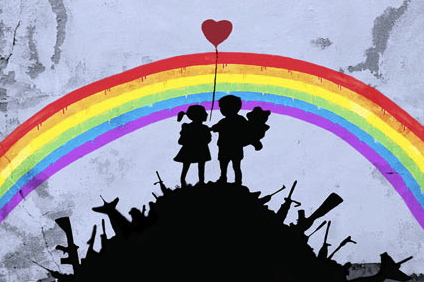
We’re All Born This Way

If you haven’t heard it from Lady Gaga, you’ve heard it from those who struggle with (or embrace) homosexuality: “I was born this way.”

Do you believe them?

The catchphrase might match your theology more than you think. In a Christian worldview, the “born this way” theory fits squarely into the doctrine of original sin—the belief that we all inherited a sinful nature because of Adam’s sin. King David sings of being “brought forth in iniquity” and conceived in sin (Psalm 51:5). A thousand years later, Paul sings the same tune: “sin came into the world through one man,” spreading sin and death to all men (Romans 5:12). The Bible makes no exceptions. When Adam’s lips touched the fruit, sin bled into every part of our being—sexuality included.

But somewhere along the line, sexuality seems to have slipped out of the equation. And believers have had a tough time reeling it back in. Does sexual orientation have a place in the doctrine of original sin? Let’s work through a few issues before we move on. Here’s what we know for sure:

1. Science has yet to give solid answers in the gay debate. People on both sides generally agree that studies on the biological causes of sexual orientation have been far from conclusive, or even flawed. Back to the drawing board. The quest for the gay gene continues.

2. Most people who identify as gay claim to have experienced same-sex attraction from an early age, for as long as they can remember. In essence, they were born that way. Whether or not that’s true scientifically, it’s certainly true experientially, as in most cases they don’t remember having ever been attracted to the opposite sex.

So those are the facts. How does the church react?

On one side of the spectrum we have Christians who (thanks to the silence of science) insist that sexual orientation is a choice. Sometimes this claim is accompanied by suspicions of a gay conspiracy—some public relations ploy to convince Christians to accept homosexuality. “If they really are born that way,” the Christian thinks, “then I might have to amend my moral standards and compromise the plain teaching of Scripture.” Fear not, dear conspiracy theorist. If the elusive gay gene were discovered tomorrow, we’d have no more grounds to alter our beliefs on sexuality than we do today. The metaphor still stands. Furthermore, simply being born with a homosexual orientation does not negate God’s will for human sexuality, just as being born a sinner does not negate God’s will for us to stop sinning!

On the other side of the spectrum we have Christians who believe that because we have little to no say in our sexual orientation we’re free to pursue a same-sex relationship, even if that means reinterpreting (or ignoring) biblical principles for human sexuality. This group, too, is mistaken. They assume that having a homosexual orientation determines what we ought to do with it. They may assume that because it’s innate, it’s also good. “Rejoice and love yourself today,” sings Lady Gaga. “’Cause, baby, you were born this way.” Of course, that turns original sin on its head. Born this way or not, we cannot toss out human responsibility and obedience to God. Like everything under the sun, our sexuality (homo, hetero and everything between) is subject to our sovereign Creator, who sets sexual boundaries both for his glory and our good.

If we’re talking science, I think it’s safe to say sexual orientation develops as a result of both biology and our environment—a combination of nature and nurture. It’s OK to acknowledge both (and many people do). But if we’re talking theology, the “born this way” debate seems to me a secondary issue, and even a roadblock to the gospel. It’s easy to get lost in the peripherals and forget we’re dealing with real people, real problems, real needs. Far worse, we forget to share the real good news.

So here’s the biblical balance: no matter our orientation, no matter where we fall in the gay debate, everyone’s greatest problem is sin—our ancient, inborn enemy. We live in the wreckage of a post-Eden world. Each of us is born with a nature that bends toward sin. (That includes the heterosexual orientation, which, although it lends itself to God’s design for marriage and procreation, is not any less stained by sin than the homosexual orientation.) Whether attracted to men or women, we come into this world as sons and daughters of the Fall. Adam’s blood flows through our veins. Yes, we’re all born this way.

That’s the bad news. But it comes with extraordinary hope. When we accept that everyone is born in sin (whether or not yours is the same as mine), it places us all on the same page of the redemption story; it poises us to receive the gospel with joy and humility; it points us toward sin’s great remedy: Jesus saves sinners of all kinds! But if we continue to cloud our conversations with fruitless “born this way” debates, we’re sure to miss the beauty—and the reach—of the gospel.

Instead, let’s agree that we’re all born this way—the marred images of God—and move on to a greater question: How will we choose to live?

Bryan can be reached at The Happy Alternative

You might also enjoy…

25 responses to “We’re All Born This Way”

  1. Andrew Kelley

    Bryan,

    This is something that I have thought a lot about as well. In fact, this is, in many ways, becoming the most difficult portion of the Christian-Gay dialoge: not because homosexuality might be a choice (as you said that isn’t the point), but because so many Christians get tripped up here and feel that can’t move forward until the issue of the “gay-gene” is settled.

  2. Natalie Foley

    Bryan, love your concluding statement. It says it all. Thanks so much.

  3. John Anthony Dunne

    Bryan, I very much agree. From personal experience getting to know people with same-sex attraction I’m convinced that one’s sexual orientation — whether for the opposite sex or the same sex — is not often a “choice.” This is a difficult issue, but I very much appreciate the way that you handled it. If we know that disease and other birth defects are the result of the Fall why are Christians bothered by the idea that SSA might be a post-Fall genetic issue? But thanks for taking us back to the gospel Bryan! We’re all born this way, and we all need grace.

    1. Bryan Magana

      John, I can see where people would have a problem with equating homosexual orientation with birth defects, such as blindness. Here’s how I see it: the curse manifests itself in various ways, both physical and spiritual. Some of these, although a result of the Fall, are morally neutral (ex. blindness, mental disabilities, aging), while others are not (ex. predispositions to homosexuality, drunkenness, anger). But both are signs of the Fall. The physical signs convict us of sin in general, as seen in creation as a whole; the spiritual signs convict us of sin in particular, as seen in ourselves. Both should cause us to call on Christ, who will one day reverse the curse and make all things new. That seems to fall within orthodoxy. But the main point is this: everyone is born in sin, raised in sin, and continues to sin (even while putting up a holy fight), and Jesus saves sinners. Thankful for that!

      1. I am interested to know where you got this idea – “morally neutral”? Any references?

        1. Bryan Magana

          Carrie, I draw this idea mostly from John 9, when Jesus and his disciples run into a man who was born blind. The disciples ask Jesus, “Rabbi, who sinned, this man or his parents, that he was born blind?” Jesus replies, “Neither this man nor his parents sinned, but this happened so that the works of God might be displayed in him.” That is, his blindness carried no moral implications. I think we can safely carry this idea into other physical effects of the Fall, including the curse on creation itself. What are your thoughts?

  4. Lynda Seneff

    Beautifully written! We all struggle with things that we may or may not be predisposed to, but you are right, that does not mean we simply disobey God. You are a blessing, Bryan!

  5. Judy Smith

    Bryan,

    You are a deep writer. You are a hero to many, including myself. You are gifted and talented. God has given you many talents. In regarads to your writing: I do not think SSA is a disease or a bad thing. I have several relatives that have SSA and fabulous partners. I think that fear and guilt in on a very low vibration and causes much sickness in the world. Guilt causes more harm than many of the things that people worry about. So I guess I believe that I am going to love my friends, my family for who they are, what kind of stewards they are to the earth and others, not who their partner is. My nephew is a return missionary about 8 years ago, He just annouced his SSA and introduced his partner. Even though some members of the family are having difficulity, I believe he did the right thing. The part of the family who can not accept him and treat him with love and kindness has the bigger sin. He is very happy in not pretending anymore. You know I believe that if we have a honest and loving heart and take care of people, are true to ourselves, nurturing ourselves and all those we can, that will be our mark. As you can tell I do not write worth beans, but my heart speaks volumes of love to my fellow man, no matter what the sexual attraction, color or race. Thanks for the thoughts. I Love you Bryan!

    1. Bryan Magana

      Judy, thanks for your encouragement. You have a big heart. What I’d like to address (and plan to explore further in an upcoming article) is that love is not the same as acceptance. Love may actually implore people to be who they’re not, to be BETTER than who they are. Jesus said something similar: “deny yourself, take up your cross and follow me” (Matthew 16:24). That might mean saying “no” to desires that don’t align with God’s will. When we do, we’re actually being TRUER to ourselves than if we had simply said “yes” and resolved to be who we are. This is every Christian’s story. We strive to be less like ourselves and more like Christ.

      1. Chris

        Hi Bryan.
        From your personal testimony to your discussions, I have been blessed and wish to get in touch with you.
        Thx.

  6. Hey Bryan,

    I am in basic theological agreement with, well, everything you say here. I’d even go a step further and say we pretty much ought to stop talking about “choice” for sexual orientation simply because no one experiences it that way, no matter the scientific underpinnings.

    But I do have a big concern with this article, which is this: I’m not so sure we can or should say that early, always-held SSA feelings means that our only options are “genetic” and “choice”. What you’ve not mentioned, and what I think is important remember, is the overwhelming connection between SSA and early psychological/environmental factors, especially the prevalence of various forms of sexual abuse. While I do believe that there are SSA folks who did not experience anything like this, I think they are relatively few and far between, and so far as I know, the research evidence makes this connection just as well as the anecdotal evidence I myself have seen, especially with male homosexuality.

    So again, I agree with every theological point you make here. But the reason I think it is important to maintain this issue in this discussion is that it puts more of a light on the fact of sin, and it helps us classify better what we’re talking about. I just don’t want to say that the only options are “choice” and “genetics” (though, again, I also would have no worldview or Scriptural issues with genetic predisposition being a reality).

    I hope that makes some sense.

    Andrew Faris

    1. Bryan Magana

      Andrew, thanks so much for addressing sexual abuse. That certainly falls under the “environment” factor mentioned in the article, and I regret not mentioning it specifically. You’re right, other people’s sins have a huge effect on our early development, and sexual abuse is a prime example. There’s a strong case for sexual abuse causing, or at least reinforcing, homosexual desires. That should fill us with compassion and make us even more careful not to blame/shame people who experience same-sex attraction. However, while I encourage Christians to focus less on “choice” when it comes to sexual orientation, we can’t drop the term entirely when it comes to homosexual practice and behavior, or any other sin for that matter. I hope to talk more about that in weeks to come.

      1. Bryan,

        I agree. “Choice” is an important term in how we frame what we do with our desires: it’s just not a helpful term for framing how our desires got there in the first place in most cases, especially with regard to sexual orientation. No problem there. I suppose I just meant to contrast (in keeping with you) those two initial lines of thinking.

        I just wonder why more Christians don’t make a bigger deal of saying more often, “But you weren’t necessarily born this way. You were abused!” It’s the clearest, most obvious, most universally empirically provable way to show anyone at all, without having to appeal to Scriptural authority, that homosexual orientation is very often not something we’re manifestly born with. Is it sinful? Well, that’s when we can start talking Scripture. But at least for me as a pastor, I need to commit myself to thinking and reading through these issues as clearly as possible and memorizing the study results. It just seems important that we think better about this stuff.

        And, to be sure, that we lead with compassion toward SSA sexual abuse victims, just as we would with any other victims of sexual abuse.

        Andrew

    2. Josh

      Bryan’s blog posts on this topic have really hit home with me, and I am incredibly grateful for what he has written. I am a Christian guy who struggles with homosexuality. While you have a valid point about sexual abuse, Andrew, and how that abuse can psychologically shape a child’s sexual development, I must say that it is not always the case (as you also touched on).

      I was raised in a very conservative, fundamental homelife by loving parents whom I doubt anyone could out-do in the parenting department. My parents were phenomenal, incredibly loving, and all-around fantastic Christian parents. There was no sexual, emotional, or other abuse. There was no homosexual environment. No family or friends who were homo. I don’t ever recall even meeting a homosexual until I was already in highschool. Yet I know that I had those desires for as far back as I can ever remember.

      Bryan’s thought is correct: it’s the sin nature. Although abuse can have psychological effects, even that can become an ‘excuse’ that clouds the real issue: sin.

      Thanks so much for your posts, Bryan! It has been an real encouragement to me.

      — Josh

      1. Bryan Magana

        Josh, thank you for sharing your story. It’s a story that many of us share, and one that needs to be told. Glad you found this article. I’m praying for you. God bless, brother!

        1. Josh

          “It’s a story that many of us share, and one that needs to be told.”

          I agree, but find it difficult to do. I am ashamed of things I’ve done, and honestly don’t want people finding out. Friends are amazed at how understanding, tolerant, and loving I am toward hurting people… never knowing why I am so compassionate and well-suited to help them.

          It’s a razor’s edge for me. I can help, but I take great pains to avoid letting them know exactly how I became so well equipped to help them.

  7. I could not agree with this more,great job Brother !

  8. […] We’re All Born This Way […]

  9. Marcus Kent

    To cut to the chase, I have been gay since as long as I can remember, and have generally had to lead a life of hidden frustration, which has very negatively impacted my life in many different ways. I am a married ex-minister with children and grandchildren, and was just outed almost a year ago by a family member finding a website on the history, which I carelessly overlooked in deletion procedures. I have wondered if perhaps I wanted to be outed so I could at last be honest and open about my increasingly neurotic behavior and observable depression.

    Like Josh, I was raised in a fairly healthy Christian home environment with no abuse of any kind. I was a good Christian boy and adolescent, but inwardly suffered from a deep fear of exposure. This lasted my entire life, with only minor and isolated experiences along the way, much fantasizing and atuoerotic behavior. Pornography had become a means of self-control and vague fulfillment in the last few years.

    I believe wholeheartedly that one is gay from birth, with environment only shaping it in various ways, some positive and some negative. That being the case, there is no way that one can experience the fulfillment of erotic needs in any way other than gay expressions. I am now having a crisis of faith because I see no way of embracing the biblical injunctions against homosexual behavior and the need to fulfill one’s inexorable erotic gay needs.

    The Christian homosexual is thus in an impossible doublebind situation. Either fulfill one’s needs somehow and suffer crippling guilt, or suppress the needs and become depressed and neurotic. Either option is negatve.

    My experience is that all the talk of grace to “overcome” and “give it God” is just that – so much religious wishful talking, and not a real and lasting solution. Erotic needs simply CANNOT be truly suppressed.

    I have thus had to adopt the view that healthy gay love and affection is not a sin, nor is it ugly and negative, but rather an alternative mode of erotic fulfillment and brotherly/sisterly love. I believe this to be inescapable realism. It has also caused me to see the Bible as a inspirational human document that is not perfectly accurate in all matters, but partakes of historical prejudices and scientific inaccuracy in some cases. That we can make adjustments in this area, as in the six-day creation issue, and still affirm the core spiritual verities that scripture preserves for us.

    Sorry to drone on, but this is a very important issue today; especially in light of the scary fiasco in Uganda and elsewhere.

    1. Kenny Montano

      Marcus, I appreciate your candor and willingness to be open about your struggles. I have to approach the subject from the perspective of a pastor and theologian. Your comments clearly point out that the main issue in this debate is not really homosexuality or SSA but Biblical authority.

      Though I want to be sympathetic to your situation and struggles, I also fear that you set a dangerous precedent in your views about Biblical authority. If we allow our personal experiences and/or problems to alter our view of the independent validity of the Bible it loses all usefulness as a unique and Divine document. The Bible is unlike other types of documents or it fails. We either accept it wholesale or it is reduced to a book of general moral maxims that shift over time, not unlike Aesop or Mother Goose.

      I know you probably disagree, but you make a decision to reject the clear (even according to your interpretation) instructions of the Bible because of your personal inability to keep its commands. I would just say that we all are personally incapable of keeping the Law of Christ. The Bible’s instructions are predicated upon the indwelling power of the Holy Spirit to over time conform us to the image of Christ and fully do so upon the resurrection.

      Your inability to keep the Bible’s commands and struggles of depression indicate one of a number of things. I would strongly urge you to seek out your own heart with regard to your own salvation. Your resignation over not just the inability to overcome your homosexual attraction but your willful and ongoing practice of it in secret may be an indication of your need to turn not to willpower or effort but to Christ to save you from your sin. This might be further indicated by your rejection of an orthodox understanding of Scripture. If you are a believer, then my admonition is to realize that Christ doesn’t offer salvation to remove temptation or free us from depression or struggle. Tell Job that being depressed and neurotic aren’t part of a believers life. Perhaps much of the guilt in your experience could be over your behavior not your temptation.

      To reject what the Bible says about any sin because I cannot conceive of being happy without it is both a theological error and a logical one. Just because you have not experienced and cannot conceive of your erotic needs being suppressed, eliminated, or altered does not therefore insist that they cannot be. As Bryan makes clear in his article, the Bible is clear about the issue of homosexuality. It is a sin according to the Scriptures. It’s not the only sin, but to play down this language or remove it entirely defeats the purpose of Law in Scripture. Hurtful and difficult as it may be the purpose of the law is to show us that we are broken people. Whether we struggle with SSA, opposite sex lust outside of marriage, kleptomania, gluttony, laziness, etc… these sins point us to our need for Christ.

      I’m very sorry that you continue to struggle and for the pain this has caused you, and I’m sure your family, throughout your life. The answer is not to throw out the commands of Scripture, but to embrace them even more fully. Admit in your heart and with your mouth to fellow believers that you are a sinner who has struggled with his sin for decades. Admit your utter helplessness to be who God demands (which is perfect) and cling to the only one who is perfect, Jesus Christ. Believe it for the first time, or reconnect with Christ in a new, open way. But please don’t give in to your sin, for though I do not know your heart, be warned from the words of Scripture about the reality of sin and its consequences. May your love for Christ overwhelm your desire for same sex eroticism.

      Be like those three Jewish young men who went willingly into the fiery furnace knowing that their God was able to save them from the fire, and be willing at the same time, like them, to declare that even if God does not save you from the fire (of your attraction, depression, neuroticism, etc…) that you’re willing to be burnt up for Christ. Don’t allow the pleasures of the body in this life keep you from enjoying the pleasures of eternity. I plead with you to return to the cross!

  10. […] or greed than to homosexuality. Things you struggle with, too. That’s because, gay or not, we’re all born into sin. Your deepest desire for gays should not be that they become straight, but that they become […]

  11. […] becoming a blogger at The Two Cities, I’ve written about gay marriage, the “born this way” debate, gay identity, ex-gays, homosexuality according to Jesus, and how to love gays. These […]

  12. Nicholas Rekieta

    Bryan, I disagree with the premise of “born this way” and tying specific sins into original sin.

    That said, I agree with the conclusion. I believe we all have our crosses to bear; our temptations are archetypal, but unique individually. Just because someone has an attraction to someone of the same sex, doesn’t make them less accountable for their actions.

    I, fortunately, do not have this particular burden, yet I have my own temptations and stumbling blocks to deal with. The worst crime we can commit as Christians is to determine any sin to be “acceptable.” God doesn’t call us to abolish sin from the lives of others, but he DOES call us to reduce the sin in our own lives. We are called to lead our brothers and sisters to Christ, and in doing so we must call sin by its grim title.

    I think we’re on the same page, here, just from semantically different starting points. Good read!

  13. As far as the scientific aspect, I’ve recently decided that like handedness sexual orientation is from birth and not a result of upbringing and not scientifically determinable.
    Your post is quite interesting though do you ever really say that it is or isn’t sin?

  14. Evan Church

    I agree with this article almost 100%, but I have had SSA problems for a while, and not necessarily from birth or young childhood. Like Marcus and Josh, I was raised in a wonderful Christian home by the two godliest people I have ever met. My childhood was full of love from both my parents, with no abuse whatsoever. I remember when I was between 5 and 7, I was in the AWANA Sparks program at my church and there was a girl there whom I determined I would marry (and I have no idea what her name was). I feel like I quickly fell into this sin over a period of a few months, but there were definitely roots way back. Either way, it doesn’t really matter at all, and I rejoice that I am saved by the blood of Christ

Leave a Reply to Judy Smith Cancel reply

Your email address will not be published. Required fields are marked *