Pray Hell Suffers

We should pray that those in hell suffer to the uttermost. 

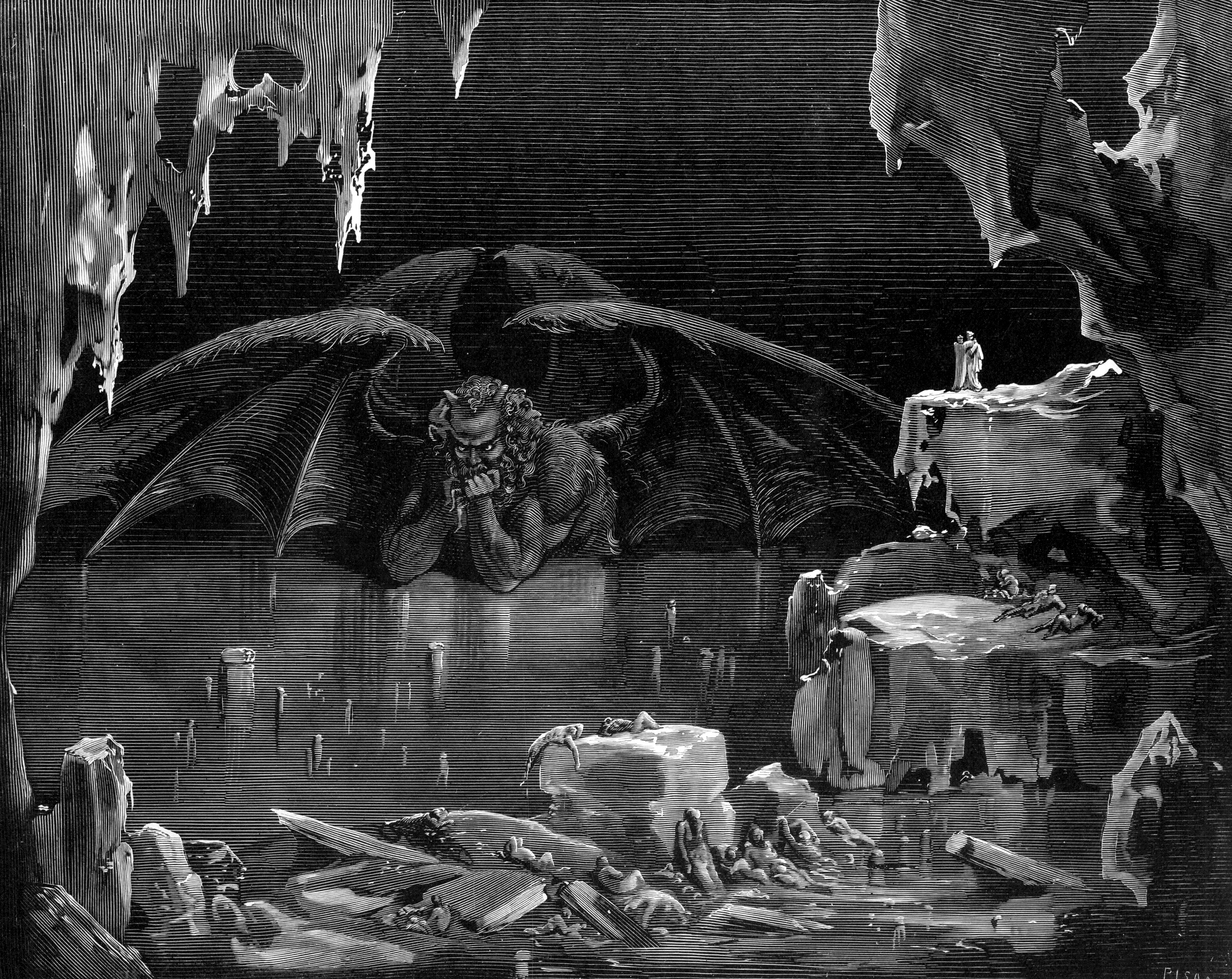
Dante’s Inferno provides a glimpse into the historical theology of hell in a particular medieval iteration. One of Dante’s many points is that God’s judgment precipitates in the idea of contrapasso–the punishment resembles or contrasts with the sin itself. The main idea with contrapasso is the φύσιν (physin), or “natural order” (Rom. 1:26) that is contradicted by sin. Contrapasso contradicts that contradiction.

Although all of God’s attributes are present in his act of levying contradicting consequences, his justice is made clear through this dynamic. Contrapasso follows the rule of divine justice; it itself is not a rule.

Divine judgment, then, is a dynamic and perpetual process. It does not solely occur on the so-called “judgment day.” Then, the question arises: what is the relationship between hell and judgment day?

As the Westminster Confession says, “. . . the souls of the wicked are cast into hell, where they remain in torments and utter darkness, reserved to the judgment of the great day.” This part of the confession, based on the historical theology of hell, renders hell as a type of holding-cell, where disembodied souls await the final judgment. The confession is not silent on what happens to those souls post-judgment day. It continues, “. . . the wicked who know not God, and obey not the Gospel of Jesus Christ, shall be cast into eternal torments, and be punished with everlasting destruction from the presence of the Lord, and from the glory of His power.” The last clause here is indicative of a continuation of the wicked’s previous hell-bound state.

As the wicked suffer in hell, they suffer in the manner of contrapasso. This glorifies God by revealing his justice to all. Praying for the continuation of the suffering of the wicked, and that they suffer to the uttermost, is of benefit to us in two ways: 1) it praises God for his contrapassonic justice, and 2) it heals us.

Praying for the salvation of the damned contradicts God’s justice, and therefore pits us against him. Praying for the eternal damnation of the wicked, however, places us in a trusting, faith-based relationship with God where we trust that his justice is ever right. It reorients our prayer life from a supplicative one to a relational one.

Part of the effects of sin is the disintegration of relationality between us and God. To countereffect this sin in this life, we must develop practices that reorient us toward the divine relationship: encouraging the suffering of the wicked by God’s hand in hell is one of those practices. Here is a prayer I have developed that we can incorporate into our liturgies:

“Lord, for those in hell: we ask that you would judge them rightly; we praise you for your justice and your true will. May our trust in your will lead us into a deeper relationship with you. In Christ’s name: Amen.”

You might also enjoy…

2 responses to “Pray Hell Suffers”

  1. Ryan

    Garrett,

    This is an admittedly original but strange blog post.

    You say: “Part of the effects of sin is the disintegration of relationality between us and God.”

    If this was the central problem, it seems it would have served your point better to focus more on Jesus’s own practice of prayer illustrated in the Gospels to demonstrate the Father-Son-Holy Spirit relationship in Jesus’s prayer life. Or if you wanted to take a practical approach, you could have done some historical theology on the church’s teaching on centering prayer and solitude. Or if you really wanted to preserve your emphasis on God’s judgement in prayer, you could have shown the trust that is displayed in the imprecatory Psalms.

    Really you could have chosen almost anything else.

    Instead, your solution is very easily misconstrued from your stated problem and distracts from your point. As far as I can tell, you concluded the post with the below statement without convincingly demonstrating it:

    “encouraging the suffering of the wicked by God’s hand in hell is one of those practices.”

    For anyone coming to Two Cities without a Christian background, this paints a pretty unattractive picture for Christians in prayer.

    While I appreciate the journey through Dante and the Westminster Confession, the destination in your post is not desirable for prayer nor does it seem compatible with Jesus’s own weeping over Jerusalem (Luke 13:34) or what Paul writes of God – that “he wants all to be saved” (1 Timothy 2:3-7).

    A lesson to be taken from Jonah is that God’s people are, more often than not, more desirable of God’s wrath than is “right” (Jonah 4:4) and that God is a reluctant dealer of judgement, wrath, and damnation (Jonah 4:2). It isn’t a stretch to imagine the conditioning effect on believers who prayer for more judgement on the damned: namely, they become needlessly distracted from mercy, grace, and the “above” mindedness that Paul encourages (Colossians 3:2) to wrath, judgement, anger.

    While your intent may have been to reapproach an unpopular reality of our faith, it seems your proposed solution is filled with so many possible misconstruals to at least warrant multiple qualifications.

    1. Garrett Eaglin

      Thanks for the comment. And as far as a reply goes I think if the reader did not look beyond my language and sat with it they would not run into any of the conundrums of which you speak.

      For instance, I did not refer to praying imprecations of wrath on those who are currently living on Earth, only the dead and in hell.

      I could have been more clear in this, but I thought the title was sufficient. I am not praying for more of God’s wrath, nor am I praying that the wicked on Earth be sent to hell to suffer eternally. I am merely cheering God on in his just, eternal, singular act of being God.

Leave a Reply

Your email address will not be published. Required fields are marked *